

In the world of plastic manufacturing, the flatness of products is a crucial factor that significantly impacts both the aesthetic appeal and functionality of the end - results. As a leading supplier of High Speed Plastic Thermoforming Machine, we understand the importance of ensuring product flatness and have developed advanced techniques and features to achieve this goal.
Understanding the Basics of High - Speed Plastic Thermoforming
High - speed plastic thermoforming is a manufacturing process that involves heating a plastic sheet until it becomes pliable and then forming it into a desired shape using a mold. The speed of this process is a key advantage, allowing for high - volume production. However, with high - speed operations, maintaining the flatness of the products can be a challenge.
The process starts with a plastic sheet being fed into the thermoforming machine. The sheet passes through a heating system where it is heated to a specific temperature. Once the plastic reaches the appropriate temperature, it is transferred to the forming station. Here, a mold is used to shape the plastic sheet. After forming, the plastic is cooled and trimmed to obtain the final product.
Factors Affecting Product Flatness in Thermoforming
There are several factors that can affect the flatness of products in high - speed plastic thermoforming. Temperature variations are one of the most significant factors. If the plastic sheet is not heated uniformly, different areas of the sheet will have different levels of pliability. This can lead to uneven stretching during the forming process, resulting in a non - flat product. For example, if one side of the sheet is hotter than the other, it will stretch more easily, causing the product to warp.
Another factor is the pressure applied during the forming process. Uneven pressure distribution across the plastic sheet can cause it to deform unevenly. If the pressure is too high in some areas and too low in others, the sheet will not form correctly, leading to a lack of flatness. Additionally, the design of the mold itself can impact product flatness. A poorly designed mold may not allow for proper air evacuation, which can cause air bubbles to form between the plastic sheet and the mold, resulting in an uneven surface.
How Our High - Speed Plastic Thermoforming Machines Ensure Flatness
Precise Temperature Control
Our High Speed Plastic Thermoforming Machine is equipped with advanced temperature control systems. These systems use multiple heating elements that are independently controlled. This allows us to heat the plastic sheet evenly across its entire surface. We can precisely adjust the temperature of each heating element based on the specific requirements of the plastic material and the product design.
For instance, we use infrared heating technology, which provides fast and efficient heating. The infrared heaters can be programmed to deliver a consistent amount of heat to the plastic sheet. We also have temperature sensors placed at various points on the heating system. These sensors continuously monitor the temperature and send feedback to the control system. If the temperature deviates from the set value, the control system automatically adjusts the power supplied to the heating elements to maintain a uniform temperature.
Uniform Pressure Distribution
To ensure uniform pressure distribution during the forming process, our machines are designed with advanced pressure control mechanisms. We use hydraulic or pneumatic systems that can apply pressure evenly across the plastic sheet. These systems are calibrated to deliver a consistent amount of pressure throughout the forming cycle.
In addition, our molds are designed to distribute pressure evenly. The mold surface is carefully machined to ensure that it makes full contact with the plastic sheet. We also use techniques such as venting to allow air to escape from between the plastic sheet and the mold. This helps to prevent air bubbles from forming and ensures that the plastic sheet conforms to the shape of the mold evenly, resulting in a flat product.
Advanced Cooling Systems
Cooling is another critical step in the thermoforming process that affects product flatness. Our machines are equipped with efficient cooling systems that can cool the plastic product quickly and evenly. Rapid and uniform cooling helps to set the shape of the product and prevent warping.
We use a combination of air and water cooling methods. Air cooling is used to initially cool the surface of the plastic product, while water cooling is used for more rapid and deeper cooling. The cooling system is designed to direct the cooling medium evenly across the product. This ensures that all parts of the product cool at the same rate, reducing the risk of warping due to differential cooling.
Quality Control and Monitoring
We have implemented a comprehensive quality control system to ensure that every product meets our high standards of flatness. Our machines are equipped with sensors and cameras that continuously monitor the forming process. These sensors can detect any deviations in temperature, pressure, or other process parameters.
If a deviation is detected, the machine automatically adjusts the process parameters to correct the issue. Additionally, we conduct regular inspections of the finished products using advanced measurement tools. These tools can accurately measure the flatness of the products and identify any defects. Any products that do not meet our quality standards are rejected, ensuring that only high - quality, flat products are delivered to our customers.
Applications of Our Machines in Ensuring Flat Products
Our High Speed Plastic Thermoforming Machine is widely used in various industries where product flatness is crucial. In the packaging industry, flat products are essential for proper stacking and storage. Our machines can produce flat plastic trays, containers, and lids that are used for packaging food, electronics, and other consumer goods.
In the automotive industry, flat plastic parts are used for interior components such as dashboards and door panels. Our machines can ensure the flatness of these parts, which is important for both aesthetic and functional reasons. Additionally, in the medical industry, flat plastic products are used for items such as medical trays and device housings. Our high - speed thermoforming machines can produce these products with the required level of flatness and precision.
Comparison with Other Thermoforming Machines
Compared to other Plastic Thermoforming Equipment in the market, our high - speed plastic thermoforming machines offer several advantages in terms of ensuring product flatness. Many other machines may lack the advanced temperature control, pressure distribution, and cooling systems that our machines are equipped with.
For example, some lower - end machines may use simple heating systems that do not provide uniform heating. This can lead to significant variations in product flatness. In contrast, our machines use state - of - the - art technology to ensure that the plastic sheet is heated, formed, and cooled uniformly, resulting in consistently flat products.
Conclusion
In conclusion, our High Speed Plastic Thermoforming Machine is designed to ensure the flatness of products through a combination of advanced technologies and precise control systems. We understand the importance of product flatness in various industries and have developed solutions to meet the high - quality requirements of our customers.

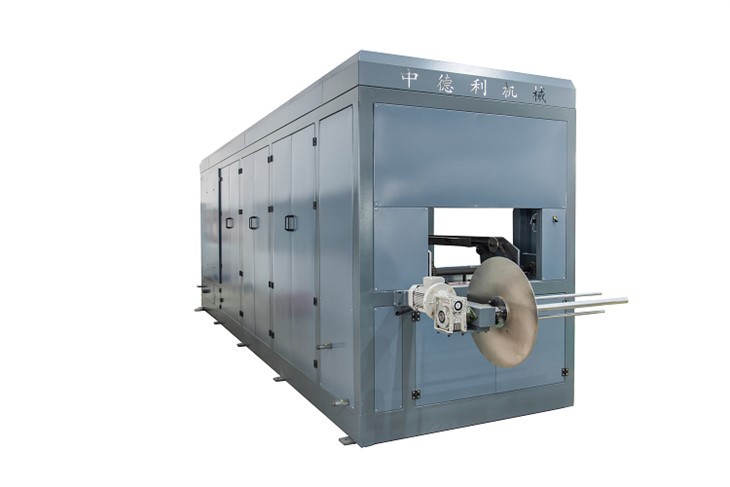
If you are in the market for a high - speed plastic thermoforming machine that can produce flat, high - quality products, we invite you to contact us for a detailed discussion. Our team of experts will be happy to assist you in selecting the right machine for your specific needs and provide you with all the necessary information about our products and services.
References
- "Plastic Thermoforming Handbook" by John W. Crawford
- "Thermoforming Technology" by Peter N. Beckmann
- Industry research reports on high - speed plastic thermoforming processes and equipment.