

As a supplier of High Speed Servo Forming Machinery, I understand the critical importance of forming speed in the manufacturing industry. Faster forming speeds can lead to increased productivity, reduced costs, and a competitive edge in the market. In this blog post, I will share some effective strategies on how to improve the forming speed of High Speed Servo Forming Machinery.
1. Optimize Machine Design and Configuration
The first step in improving forming speed is to ensure that your High Speed Servo Forming Machinery High Speed Servo Forming Machinery is designed and configured for maximum efficiency. This includes selecting the right servo motors, drives, and control systems.
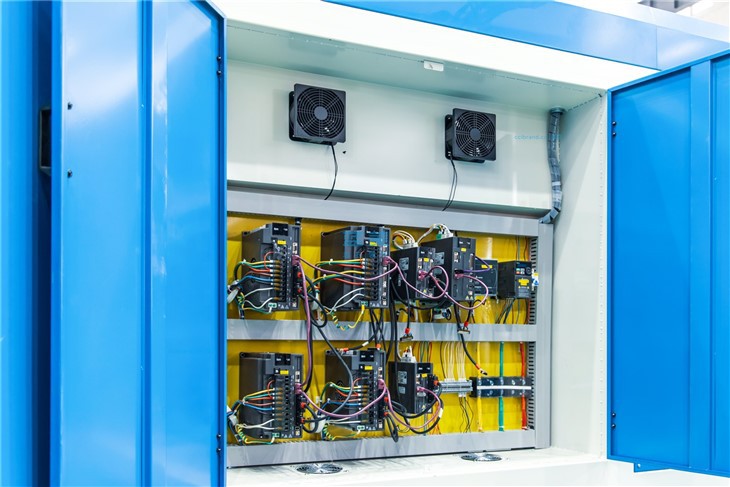
- Servo Motors: High - performance servo motors are essential for achieving high forming speeds. Look for motors with high torque density, fast acceleration, and deceleration capabilities. These motors can quickly respond to control signals and move the forming tools with precision.
- Drives: The servo drives should be matched with the servo motors to provide the necessary power and control. Advanced drives can offer features such as high - speed communication interfaces, precise current control, and adaptive control algorithms, which can improve the overall performance of the machinery.
- Control Systems: A sophisticated control system is crucial for coordinating the movement of different components in the forming machinery. Modern control systems use advanced algorithms to optimize the motion profiles, reduce cycle times, and ensure smooth operation. For example, the control system can adjust the speed and position of the forming tools in real - time based on the material properties and the forming requirements.
2. Improve Material Handling
Efficient material handling is another key factor in improving the forming speed. Delays in material loading and unloading can significantly reduce the overall productivity of the High Speed Servo Forming Machinery.
- Automated Loading and Unloading: Implementing automated material handling systems can eliminate manual labor and reduce the time required for loading and unloading materials. For example, robotic arms can be used to pick and place materials accurately and quickly. These robots can be programmed to work in synchronization with the forming machinery, ensuring a continuous production flow.
- Material Feeding Systems: A well - designed material feeding system can ensure a smooth and consistent supply of materials to the forming area. Vibratory feeders, conveyor belts, and hoppers can be used to transport materials from the storage area to the forming machine. The feeding system should be able to adjust the feed rate according to the forming speed to avoid material jams or shortages.
3. Enhance Tooling Design
The design of the forming tools has a direct impact on the forming speed and quality. Well - designed tools can reduce the forming time and improve the accuracy of the formed parts.
- Tool Geometry: Optimize the geometry of the forming tools to minimize the deformation resistance of the material. For example, using rounded edges and smooth surfaces can reduce friction and allow the material to flow more easily during the forming process. Additionally, the tool geometry should be designed to match the shape of the final product, which can reduce the number of forming steps required.
- Tool Materials: Selecting the right tool materials is essential for high - speed forming. High - strength and wear - resistant materials can withstand the high pressures and temperatures generated during the forming process. Carbide, high - speed steel, and ceramic materials are commonly used for forming tools due to their excellent mechanical properties.
- Tool Coating: Applying a suitable coating to the forming tools can further improve their performance. Coatings such as titanium nitride (TiN), titanium carbonitride (TiCN), and diamond - like carbon (DLC) can reduce friction, increase wear resistance, and improve the surface finish of the formed parts.
4. Optimize Forming Parameters
The forming parameters, such as forming force, speed, and temperature, need to be optimized to achieve the highest possible forming speed without compromising the quality of the formed parts.
- Forming Force: The forming force should be adjusted according to the material properties and the forming requirements. Too much force can cause excessive deformation or damage to the tools, while too little force may result in incomplete forming. By using advanced sensors and control systems, the forming force can be monitored and adjusted in real - time to ensure optimal performance.
- Forming Speed: The forming speed is a critical parameter that directly affects the productivity of the machinery. However, increasing the forming speed too much can lead to issues such as material cracking, poor surface finish, and tool wear. Therefore, it is necessary to find the optimal forming speed through experiments and simulations.
- Forming Temperature: For some materials, the forming temperature can have a significant impact on the forming speed and quality. Heating the material to an appropriate temperature can reduce its deformation resistance and improve its formability. However, the temperature needs to be controlled precisely to avoid over - heating or under - heating, which can affect the mechanical properties of the formed parts.
5. Implement Predictive Maintenance
Regular maintenance is essential for keeping the High Speed Servo Forming Machinery in good working condition. However, traditional maintenance methods based on fixed time intervals may not be sufficient to prevent unexpected breakdowns. Predictive maintenance can help to identify potential problems before they occur and reduce the downtime of the machinery.
- Condition Monitoring: Install sensors on the critical components of the forming machinery to monitor their operating conditions. These sensors can measure parameters such as temperature, vibration, and motor current. By analyzing the data collected from these sensors, it is possible to detect early signs of wear, damage, or malfunction.
- Fault Diagnosis and Prognosis: Use advanced algorithms and data analytics techniques to diagnose faults and predict the remaining useful life of the components. For example, machine learning algorithms can be trained to identify patterns in the sensor data that indicate potential problems. Based on the prognosis results, maintenance actions can be scheduled in advance to avoid unplanned downtime.
6. Employee Training and Skill Development
The performance of the High Speed Servo Forming Machinery also depends on the skills and knowledge of the operators. Well - trained operators can operate the machinery more efficiently, troubleshoot problems quickly, and make necessary adjustments to improve the forming speed.
- Technical Training: Provide comprehensive technical training to the operators on the operation, maintenance, and programming of the High Speed Servo Forming Machinery. The training should cover topics such as the working principles of the machinery, the functions of different components, and the operation of the control system.
- Skill Enhancement: Encourage the operators to continuously improve their skills through on - the - job training, workshops, and certification programs. By staying updated with the latest technologies and best practices in the field of forming machinery, the operators can contribute to the improvement of the forming speed and quality.
In conclusion, improving the forming speed of High Speed Servo Forming Machinery requires a comprehensive approach that involves optimizing the machine design, improving material handling, enhancing tooling design, optimizing forming parameters, implementing predictive maintenance, and providing employee training. By implementing these strategies, manufacturers can significantly increase the productivity of their High Speed Servo Forming Machinery and gain a competitive advantage in the market.
If you are interested in our High Speed Servo Forming Machinery, Servo High Speed Plastic Container Forming Machine, or Automatic Servo Driving High Speed Forming Machine, please feel free to contact us for further discussion and procurement negotiation. We are committed to providing high - quality products and professional services to meet your manufacturing needs.

References
- Groover, M. P. (2010). Fundamentals of Modern Manufacturing: Materials, Processes, and Systems. Wiley.
- Dieter, G. E., & Schmidt, L. C. (2008). Mechanical Metallurgy. McGraw - Hill.
- Altan, T., Oh, S. I., & Gegel, H. L. (1983). Metal Forming: Fundamentals and Applications. American Society for Metals.