

Plastic thermoforming is a manufacturing process where plastic sheets are heated to a pliable forming temperature, formed to a specific shape in a mold, and trimmed to create a usable product. As a supplier of plastic thermoforming equipment, I have in - depth knowledge of the different types of machines available in the market. In this blog, I'll discuss various types of plastic thermoforming equipment to help you understand which one suits your specific production needs.
1. Vacuum Thermoforming Machines
Vacuum thermoforming is one of the most common types of thermoforming processes. In this method, a plastic sheet is heated until it becomes soft and then placed over a mold. A vacuum is applied to draw the sheet into the shape of the mold.
Advantages
- Cost - effective: Vacuum thermoforming machines are relatively inexpensive compared to other types of thermoforming equipment. This makes them a great choice for small - scale production or for businesses on a budget.
- Simple operation: The process is straightforward, and operators can be trained quickly. This reduces labor costs and increases production efficiency.
Applications
- Food packaging: Vacuum - formed trays for fruits, vegetables, and meats are widely used in the food industry. For example, the clear plastic trays that hold strawberries in the supermarket are often made using vacuum thermoforming.
- Medical device packaging: Small, custom - shaped trays for medical instruments can be produced using this method.
If you are interested in a machine suitable for this process, you can check out our PP Pet Plastic Packaging Container Thermoforming Machine, which is highly efficient in creating various plastic packaging containers through vacuum thermoforming.
2. Pressure Thermoforming Machines
Pressure thermoforming is an advanced form of thermoforming. In addition to using a vacuum, it applies positive air pressure on the top side of the heated plastic sheet to force it into the mold.
Advantages
- High - quality parts: Pressure thermoforming can produce parts with more detailed features and better surface finish compared to vacuum thermoforming. This is because the additional pressure helps the plastic to conform more precisely to the mold.
- Thicker plastics: It can handle thicker plastic sheets, which allows for the production of more durable products.
Applications
- Automotive interior parts: Dashboards, door panels, and other interior components in cars are often made using pressure thermoforming. The high - quality finish and durability of the parts make them suitable for automotive applications.
- Electronics enclosures: Cases for electronic devices such as computers, tablets, and smartphones can be produced using this method.
3. Twin - Sheet Thermoforming Machines
Twin - sheet thermoforming involves heating two plastic sheets simultaneously and then forming them together to create a single, hollow part.
Advantages
- Complex shapes: This method can produce parts with complex geometries that are difficult to achieve with single - sheet thermoforming. For example, parts with internal ribs or cavities can be easily created.
- Insulation properties: The hollow structure of the parts provides good insulation, which is useful in applications where temperature control is important.
Applications
- Coolers and refrigeration units: The insulated walls of coolers and refrigerators are often made using twin - sheet thermoforming.
- Boats and watercraft: Hulls of small boats and other watercraft can be produced using this method, taking advantage of the complex shapes and durability that can be achieved.
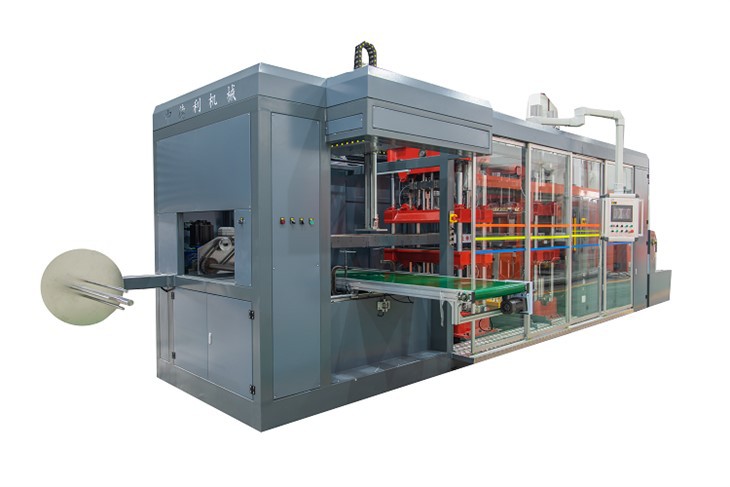
4. Fully Automatic Plastic Thermoforming Machines
Fully automatic plastic thermoforming machines are designed to perform the entire thermoforming process with minimal human intervention.

Advantages
- High production speed: These machines can produce a large number of parts in a short period of time. This is ideal for high - volume production runs.
- Consistency: Since the process is automated, the quality of the parts is more consistent. There is less variation in the size, shape, and quality of the products compared to manual or semi - automatic machines.
Applications
- Disposable cutlery and cups: High - volume production of disposable plastic cutlery, cups, and plates is often done using fully automatic thermoforming machines.
- Blister packs: The clear plastic blister packs used for packaging small items such as pills, batteries, and small toys are typically produced using these machines.
Our Fully Automatic Plastic Thermoforming Machine is a state - of - the - art solution for businesses looking for high - speed, consistent production. It is equipped with advanced control systems to ensure optimal performance.
5. Single Working Station Plastic Thermoforming Machine
Single working station plastic thermoforming machines are designed for smaller production runs or for applications where flexibility is required.
Advantages
- Lower cost: These machines are generally less expensive than multi - station or fully automatic machines. This makes them a good choice for small businesses or for prototyping.
- Flexibility: They can be easily reconfigured to produce different types of parts. This allows businesses to quickly adapt to changing market demands.
Applications
- Prototyping: When developing a new plastic product, a single - working - station machine can be used to produce a small number of prototypes for testing and evaluation.
- Custom - made products: Small - batch production of custom - designed plastic parts, such as promotional items or specialized industrial components, can be done using these machines.
You can explore our Single Working Station Plastic Thermoforming Machine for a cost - effective and flexible solution for your production needs.
Considerations When Choosing Plastic Thermoforming Equipment
- Production volume: If you need to produce a large number of parts, a fully automatic or high - speed machine may be the best choice. For small - scale production or prototyping, a single - working - station or semi - automatic machine may be more suitable.
- Part complexity: Complex parts with detailed features may require pressure thermoforming or twin - sheet thermoforming machines. Simpler parts can be produced using vacuum thermoforming.
- Budget: Your budget will also play a significant role in your decision. Consider the initial cost of the machine, as well as the operating costs such as energy consumption, maintenance, and labor.
As a supplier of plastic thermoforming equipment, we understand the importance of choosing the right machine for your business. We offer a wide range of high - quality thermoforming machines to meet the diverse needs of our customers. Whether you are a small - scale producer or a large - scale manufacturer, we have the solution for you.
If you are interested in learning more about our plastic thermoforming equipment or have any specific requirements, please feel free to contact us. Our team of experts is ready to assist you in making the right choice for your production process. We look forward to the opportunity to work with you and help you achieve your production goals.
References
- "Thermoforming Handbook" by James F. Marcus
- "Plastics Materials and Processes" by Charles A. Harper
- Industry reports from the Society of Plastics Engineers (SPE)