

As a supplier of Servo High Speed Forming Machines, ensuring the quality of the products manufactured by these machines is of utmost importance. Quality control measures not only guarantee the reliability and performance of the end - products but also enhance the reputation of our brand in the market. In this blog, we will explore the quality control measures for the products of Servo High Speed Forming Machines.
Raw Material Inspection
The quality control process starts with the inspection of raw materials. The raw materials used in the forming process can significantly affect the quality of the final product. We carefully select our suppliers and conduct strict incoming inspections. For example, if we are using plastic for our Servo High Speed Plastic Container Forming Machine, we check the plastic's physical properties such as density, melting point, and viscosity. These properties determine how well the plastic will flow during the forming process and how strong the final container will be.
We also test the chemical composition of the raw materials. Some plastics may contain additives or impurities that can affect the product's appearance, durability, or safety. By analyzing the chemical composition, we can ensure that the raw materials meet our quality standards and are suitable for the intended applications.
Machine Calibration and Maintenance
Regular calibration and maintenance of the Servo High Speed Forming Machines are crucial for product quality. These machines operate at high speeds and require precise settings to produce consistent and high - quality products. We have a team of skilled technicians who perform regular calibration checks on the machines. They ensure that the temperature, pressure, and speed settings are accurate and within the specified tolerances.
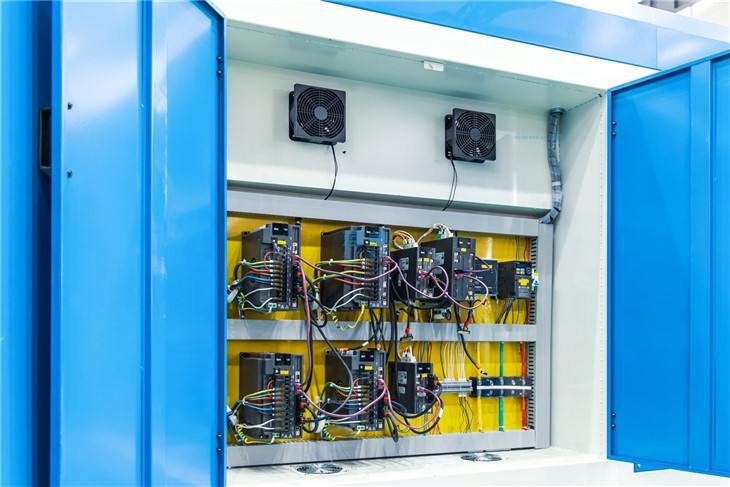
For instance, in an Automatic Servo Driving High Speed Forming Machine, the servo motors are calibrated to provide precise and stable motion control. Incorrect motor calibration can lead to uneven forming, resulting in products with inconsistent thickness or shape.
Maintenance procedures are also strictly followed. This includes cleaning the machines regularly to prevent the accumulation of debris, which can affect the forming process. Lubrication of moving parts is carried out at recommended intervals to reduce friction and wear, ensuring smooth operation. Additionally, any worn - out parts are replaced promptly to maintain the machine's performance and accuracy.
In - process Quality Monitoring
During the forming process, we implement in - process quality monitoring to detect and correct any potential issues immediately. We use a variety of sensors and monitoring systems to track key parameters such as temperature, pressure, and cycle time. These sensors are installed at critical points in the machine to provide real - time data.
For example, if the temperature in the heating zone of the machine deviates from the set value, the monitoring system will send an alert to the operator. The operator can then adjust the temperature settings to ensure that the plastic is heated to the correct temperature for optimal forming.
We also conduct visual inspections of the products at regular intervals. Our operators visually check the products for any visible defects such as cracks, scratches, or warping. In addition, we use automated inspection systems, which can detect even minor defects that may be missed by the human eye. These systems are based on technologies such as machine vision, which can accurately identify and measure defects in the products.
Final Product Inspection
Once the products are formed, a comprehensive final product inspection is carried out. This inspection includes both physical and functional tests. Physical tests involve measuring the dimensions of the products to ensure that they meet the design specifications. We use precision measuring tools such as calipers and micrometers to measure the length, width, height, and thickness of the products.
Functional tests are also conducted to evaluate the performance of the products. For example, if we are manufacturing plastic containers, we test their sealing properties to ensure that they can prevent leakage. We also test the durability of the products by subjecting them to simulated real - world conditions, such as dropping or stacking tests.
The final product inspection also includes a review of the product's appearance. The products should have a smooth surface finish, consistent color, and no visible defects. Any products that do not meet the quality standards are rejected and either re - worked or discarded.
Statistical Process Control
Statistical Process Control (SPC) is an important quality control measure in our manufacturing process. We collect and analyze data from the production process to identify trends and patterns. By using statistical methods, we can determine whether the process is stable and within control limits.
For example, we calculate the process capability index (Cpk) to evaluate the ability of the process to produce products within the specified tolerance limits. A high Cpk value indicates that the process is highly capable of producing high - quality products. If the Cpk value is low, we investigate the root causes of the problem, such as machine malfunctions or inconsistent raw materials.
We also use control charts to monitor the key process parameters over time. Control charts help us to detect any sudden changes or trends in the process, allowing us to take preventive actions before the quality of the products is affected.
Employee Training
Well - trained employees are essential for effective quality control. We provide comprehensive training programs for our operators and quality control personnel. The training includes theoretical knowledge about the forming process, machine operation, and quality control principles.
We also provide practical training on the use of inspection tools and equipment. Our operators are trained to perform in - process inspections accurately and to use the monitoring systems effectively. Quality control personnel are trained to conduct final product inspections using the appropriate test methods and to interpret the test results correctly.
Regular refresher courses are conducted to keep the employees updated with the latest technologies and quality control techniques. This ensures that our employees are always capable of maintaining the high - quality standards of our products.
Customer Feedback and Continuous Improvement
Customer feedback is a valuable source of information for quality improvement. We actively collect feedback from our customers about the quality of our products. We listen to their suggestions and complaints carefully and use this information to identify areas for improvement.

Based on the customer feedback, we make necessary adjustments to our quality control measures. For example, if customers report that the products are prone to cracking during use, we may review our raw material selection or the forming process parameters. We also conduct root cause analysis to determine the underlying reasons for the problems and implement corrective actions to prevent them from recurring.
Continuous improvement is an ongoing process in our company. We regularly review and update our quality control systems to adapt to the changing market requirements and technological advancements. By continuously improving the quality of our products, we can enhance customer satisfaction and gain a competitive edge in the market.
In conclusion, as a supplier of Servo High Speed Forming Machines, we implement a comprehensive set of quality control measures to ensure the high quality of the products manufactured by our machines. From raw material inspection to final product testing, every step of the manufacturing process is carefully monitored and controlled. We believe that by maintaining strict quality control, we can provide our customers with reliable and high - performance products.
If you are interested in our High Speed Servo Forming Machinery or have any questions about our quality control measures, please feel free to contact us for further discussion and potential procurement.
References
- Montgomery, D. C. (2017). Introduction to Statistical Quality Control. Wiley.
- Grant, E. L., & Leavenworth, R. S. (1996). Statistical Quality Control. McGraw - Hill.