

As a provider of Servo High Speed Forming Machines, I am often asked about the forming speed control methods of these advanced pieces of equipment. In this blog, I will delve into the various techniques used to control the forming speed of a Servo High Speed Forming Machine, providing you with a comprehensive understanding of how these machines operate and how speed control impacts the forming process.
Understanding Servo High Speed Forming Machines
Before we discuss the speed control methods, let's briefly understand what Servo High Speed Forming Machines are. These machines are designed to shape materials such as plastics, metals, and composites at high speeds with precision and efficiency. They are widely used in industries like packaging, automotive, and consumer goods manufacturing. For instance, our Automatic Servo Driving High Speed Forming Machine is capable of producing complex shapes in a short time, making it ideal for high-volume production. Similarly, the Servo High Speed Plastic Container Forming Machine is specifically tailored for the production of plastic containers, ensuring consistent quality and high output. And our High Speed Servo Forming Machinery offers versatility in forming different materials and shapes.
Importance of Forming Speed Control
Forming speed control is crucial in a Servo High Speed Forming Machine for several reasons. Firstly, it affects the quality of the formed products. If the speed is too high, the material may not have enough time to flow properly, resulting in defects such as incomplete filling, warping, or uneven thickness. On the other hand, if the speed is too low, the production efficiency will be significantly reduced, increasing the manufacturing cost. Secondly, speed control is essential for ensuring the safety of the operators and the longevity of the machine. By maintaining an appropriate speed, the machine can operate smoothly without excessive wear and tear on its components.
Common Forming Speed Control Methods
1. Servo Motor Control
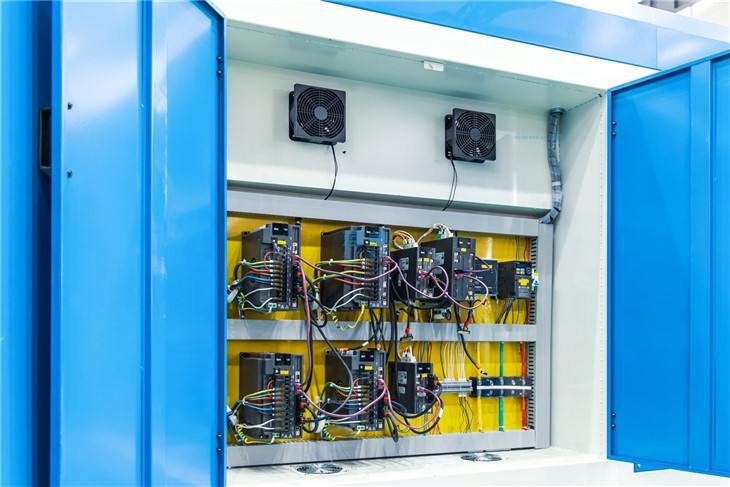
Servo motors are at the heart of a Servo High Speed Forming Machine. They offer precise control over the speed and position of the moving parts. The speed of a servo motor can be adjusted by varying the input voltage or current. Modern servo motor controllers use advanced algorithms to ensure accurate speed regulation. For example, proportional-integral-derivative (PID) controllers are commonly used to adjust the motor speed based on the difference between the desired speed and the actual speed. This feedback control mechanism allows for real-time adjustments, ensuring that the forming speed remains stable even under changing load conditions.
2. Programmable Logic Controller (PLC)
A Programmable Logic Controller (PLC) is another important component in speed control. It can be programmed to control the entire forming process, including the speed of the machine. The PLC receives input signals from various sensors, such as speed sensors, position sensors, and pressure sensors, and uses these signals to make decisions about the appropriate speed settings. For instance, if the sensor detects that the material is not flowing properly, the PLC can reduce the forming speed to allow more time for the material to fill the mold. PLCs also offer the flexibility to change the speed settings easily, making it suitable for different production requirements.
3. Hydraulic or Pneumatic Systems
In some Servo High Speed Forming Machines, hydraulic or pneumatic systems are used to control the forming speed. Hydraulic systems use pressurized fluid to transfer power and control the movement of the machine components. By adjusting the flow rate and pressure of the hydraulic fluid, the speed of the forming process can be controlled. Pneumatic systems, on the other hand, use compressed air to perform similar functions. These systems are often used in applications where a high level of force is required, and the speed needs to be adjusted quickly.
4. Belt and Pulley Systems
Belt and pulley systems are a traditional method of speed control. By changing the size of the pulleys, the speed ratio between the motor and the forming mechanism can be adjusted. This method is relatively simple and cost-effective, but it may not offer the same level of precision as servo motor control or PLC control. However, in some applications where a constant speed is required and the precision requirements are not very high, belt and pulley systems can still be a viable option.
Factors Affecting Forming Speed Control
1. Material Properties
The properties of the material being formed have a significant impact on the forming speed. Different materials have different flow characteristics, melting points, and cooling rates. For example, plastics with a high viscosity require a slower forming speed to ensure proper filling of the mold. Metals, on the other hand, may require a higher speed to avoid oxidation and to achieve the desired shape. Understanding the material properties is essential for setting the appropriate forming speed.
2. Mold Design
The design of the mold also affects the forming speed. A complex mold with intricate details may require a slower speed to ensure that the material can fill all the cavities properly. Additionally, the size and shape of the mold can influence the flow of the material, which in turn affects the speed at which the forming process can be carried out.
3. Machine Capacity
The capacity of the Servo High Speed Forming Machine, including its power, torque, and maximum speed, also plays a role in speed control. The machine must be capable of handling the required forming speed without overloading or causing damage to its components. Therefore, it is important to choose a machine with the appropriate capacity for the specific application.
Optimizing Forming Speed Control
To optimize the forming speed control of a Servo High Speed Forming Machine, the following steps can be taken:
1. Material Testing
Conduct thorough material testing to understand the flow behavior and other properties of the material. This will help in determining the optimal forming speed for the specific material.
2. Mold Optimization
Work with experienced mold designers to optimize the mold design. A well-designed mold can improve the flow of the material and allow for a higher forming speed.

3. Machine Calibration
Regularly calibrate the machine to ensure that the speed control systems are accurate and reliable. This includes checking the servo motors, PLCs, and other control components.
4. Operator Training
Provide comprehensive training to the operators to ensure that they understand the speed control methods and how to adjust the settings properly. Well-trained operators can make real-time adjustments based on the actual production conditions, improving the overall efficiency and quality of the forming process.
Conclusion
In conclusion, the forming speed control of a Servo High Speed Forming Machine is a complex process that involves multiple factors and control methods. By understanding the different speed control techniques, the factors affecting speed control, and how to optimize the process, manufacturers can achieve higher production efficiency, better product quality, and longer machine lifespan. As a supplier of Servo High Speed Forming Machines, we are committed to providing our customers with the latest technology and solutions to meet their specific needs. If you are interested in learning more about our products or have any questions about forming speed control, please feel free to contact us for further discussion and potential procurement.
References
- [1] Smith, J. (2018). Advanced Manufacturing Technology. Publisher XYZ.
- [2] Johnson, A. (2019). Servo Motor Control in Industrial Applications. Journal of Manufacturing Science.
- [3] Brown, C. (2020). Forming Process Optimization for High-Speed Machines. Manufacturing Review.