

Hey there! As a supplier of Four - station Plastic Thermoforming Machines, I'm super stoked to share with you how these amazing machines work. Let's dive right in!
Basics of Plastic Thermoforming
Before we get into the four - station stuff, let's quickly go over what plastic thermoforming is. Thermoforming is a manufacturing process where a plastic sheet is heated to a pliable forming temperature. Then, it's stretched onto a single - sided mold and cooled to take the shape of the mold. This process is used to create all sorts of plastic products, from packaging containers to automotive parts.
What is a Four - station Plastic Thermoforming Machine?
A four - station plastic thermoforming machine is a more advanced type of thermoforming equipment. It has four distinct stations, each with a specific function. These stations work in a coordinated way to transform a flat plastic sheet into a finished plastic product efficiently.
The Working Principle of Each Station
Station 1: Heating
The first station is all about heating. Here, a roll of plastic sheet is fed into the machine. The sheet passes through a heating system, which can be either infrared heaters or radiant heaters. These heaters raise the temperature of the plastic sheet to its thermoforming temperature. Different types of plastics have different thermoforming temperatures. For example, PET (Polyethylene Terephthalate) usually needs to be heated to around 100 - 120°C (212 - 248°F), while PVC (Polyvinyl Chloride) can be formed at a lower temperature, around 80 - 100°C (176 - 212°F).
The heating process is crucial. If the plastic isn't heated enough, it won't be pliable enough to take the shape of the mold. On the other hand, if it's over - heated, it can start to degrade, losing its strength and quality. The heating system in our Four - station Plastic Thermoforming Machines is carefully calibrated to ensure the plastic sheet gets the perfect amount of heat.
Station 2: Forming
Once the plastic sheet is heated to the right temperature, it moves on to the second station: forming. At this station, the heated plastic sheet is placed over a mold. There are two main methods of forming: vacuum forming and pressure forming.
In vacuum forming, a vacuum is applied through small holes in the mold. This sucks the heated plastic sheet down onto the mold, taking its shape. It's a relatively simple and cost - effective method, and it's great for creating products with shallow depths.
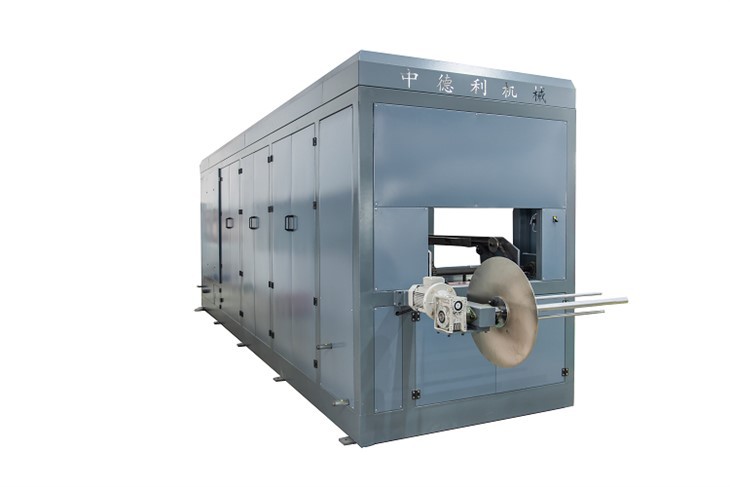

Pressure forming, on the other hand, uses both a vacuum and compressed air. The compressed air is forced against the back of the plastic sheet, pushing it into the mold with more force. This method allows for more detailed and deeper - drawn products. Our machines are designed to support both methods, giving you the flexibility to choose the best one for your production needs.
Station 3: Trimming
After the plastic sheet has been formed into the desired shape, it moves to the third station: trimming. At this point, the formed plastic product is still attached to the surrounding plastic sheet. The trimming station uses a cutting tool, such as a die cutter or a laser cutter, to separate the finished product from the excess plastic.
The excess plastic, also known as the scrap, can be recycled. Recycling the scrap not only reduces waste but also saves on material costs. Our Four - station Plastic Thermoforming Machines are designed to minimize the amount of scrap generated during the trimming process, making them more environmentally friendly and cost - effective.
Station 4: Ejection and Stacking
The final station is where the finished plastic products are ejected from the mold and stacked. An ejection mechanism, such as air jets or mechanical pushers, is used to remove the products from the mold. Once ejected, the products are stacked neatly, ready for packaging and shipping.
The stacking process can be automated, which increases the efficiency of the production line. Our machines can be configured to stack the products in different ways, depending on your requirements. Whether you need them stacked in rows, columns, or in a specific pattern, we've got you covered.
Advantages of a Four - station Plastic Thermoforming Machine
One of the biggest advantages of a four - station machine is its high production speed. Since each station works simultaneously on different parts of the process, the overall production cycle is much faster compared to single - station machines.
Another advantage is the quality and consistency of the products. The four - station setup allows for better control over each step of the thermoforming process. This means that the finished products are more likely to have uniform thickness, shape, and quality.
Our Four - station Plastic Thermoforming Machines also offer a high degree of flexibility. You can easily change the molds to produce different types of products. Whether you're making small packaging containers or large automotive parts, our machines can handle it.
Related Products
If you're interested in other types of thermoforming machines, we also offer Automatic Multi - Station Plastic Thermoforming Machine, Multi - Station Plastic Thermoforming Boxes Production Machines, and Multi Function Multi - Station Plastic Thermoforming Machine. These machines have their own unique features and advantages, and they can be a great addition to your production line.
Why Choose Our Machines
As a supplier, we're committed to providing high - quality Four - station Plastic Thermoforming Machines. Our machines are built with the latest technology and the best materials, ensuring long - term reliability and performance.
We also offer excellent customer service. Our team of experts is always ready to help you with any questions or issues you may have. Whether it's installation, maintenance, or troubleshooting, we've got your back.
Let's Talk
If you're in the market for a Four - station Plastic Thermoforming Machine or any of our other products, we'd love to hear from you. We can provide you with more detailed information, answer your questions, and even arrange a demonstration. Contact us today to start the conversation about how our machines can take your plastic production to the next level.
References
- Modern Plastics Encyclopedia.
- Handbook of Thermoforming Technology.