

The forming speed of a plastic thermoforming machine is a critical factor that significantly impacts production efficiency, cost - effectiveness, and overall business competitiveness. As a leading supplier of plastic thermoforming machines, I am well - versed in the nuances of this aspect and am eager to share in - depth knowledge about it.
Understanding Plastic Thermoforming
Before delving into the forming speed, it's essential to understand the basic process of plastic thermoforming. Plastic thermoforming is a manufacturing process where a plastic sheet is heated to a pliable forming temperature, then stretched onto or into a mold, and finally cooled to take on the shape of the mold. This process is widely used to produce a variety of products, from packaging containers to automotive parts.
Factors Affecting the Forming Speed
Machine Design and Configuration
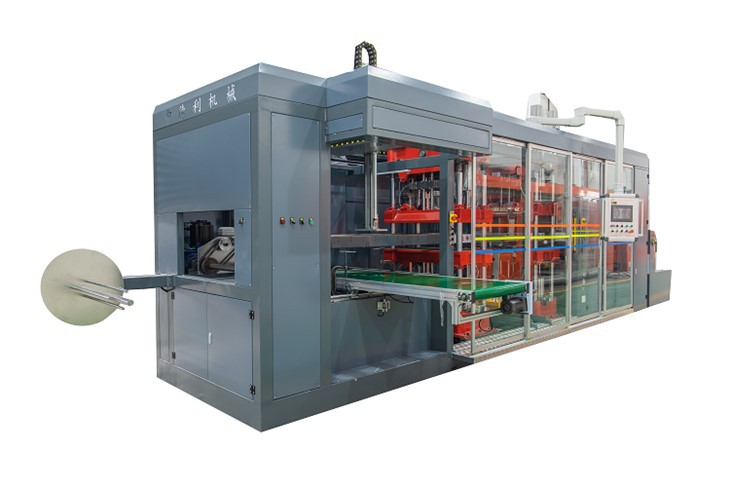
The design of the plastic thermoforming machine plays a crucial role in determining its forming speed. For instance, High - Tech Plastic Thermoforming Machine often incorporate advanced technologies and innovative designs that optimize the heating, stretching, and cooling processes. Machines with multiple heating zones can heat the plastic sheet more evenly and quickly, reducing the overall cycle time.
A high - speed plastic thermoforming machine, such as the High Speed Plastic Thermoforming Machine, is specifically engineered for rapid production. These machines typically feature high - performance motors, precise control systems, and efficient cooling mechanisms, all of which contribute to faster forming speeds.
The number of working stations also affects the forming speed. A Single Working Station Plastic Thermoforming Machine performs the entire thermoforming process at one station, which may have a relatively slower forming speed compared to multi - station machines. Multi - station machines can carry out different operations simultaneously at different stations, such as heating, forming, and trimming, thereby increasing the overall production speed.
Plastic Material Properties
Different plastic materials have varying physical and chemical properties, which directly influence the forming speed. The melting point, thermal conductivity, and stretchability of the plastic material are key factors. For example, materials with lower melting points can be heated more quickly, reducing the heating time in the thermoforming process. Plastics with high thermal conductivity can transfer heat more efficiently during both heating and cooling stages, leading to faster cycle times.
The stretchability of the plastic material also matters. If a plastic can be stretched easily without tearing or thinning unevenly, it allows for a faster stretching process when forming it into the desired shape. Some common plastics used in thermoforming, like PET (Polyethylene Terephthalate) and PVC (Polyvinyl Chloride), have different characteristics that affect the forming speed. PET has good mechanical properties and relatively high thermal stability, but it may require more precise heating control. PVC, on the other hand, has a lower melting point and is more flexible, which can sometimes result in faster forming speeds under appropriate conditions.
Mold Complexity
The complexity of the mold is another significant factor. Simple molds with basic shapes, such as flat trays or rectangular containers, are easier and quicker to form. The plastic sheet can be stretched and formed into these shapes with less resistance and in a shorter time. In contrast, complex molds with detailed features, undercuts, or deep draws require more precise control of the stretching process. The plastic sheet needs to be carefully manipulated to ensure that it fills all the details of the mold without defects. This often leads to a longer forming time, as the machine may need to apply more pressure or use additional techniques to achieve the desired shape.
Measuring the Forming Speed
The forming speed of a plastic thermoforming machine is usually measured in cycles per minute (CPM). One cycle represents the complete process of heating the plastic sheet, forming it into the desired shape in the mold, cooling it, and removing the finished product from the mold. For example, a machine with a forming speed of 10 CPM can produce 10 finished products per minute under ideal conditions.
However, it's important to note that the actual forming speed may vary depending on the factors mentioned above. In real - world production scenarios, the forming speed may be affected by factors such as machine maintenance, operator skill, and the quality of the raw materials. A well - maintained machine operated by a skilled technician can achieve closer to its maximum rated forming speed.
Impact of Forming Speed on Production
Efficiency and Output
A higher forming speed directly translates to increased production efficiency. With a faster - forming machine, more products can be produced within a given time frame. This is especially important for large - scale manufacturing operations where meeting production targets is crucial. For example, in the packaging industry, where high - volume production is common, a high - speed thermoforming machine can produce thousands of packaging containers per hour, ensuring that the supply meets the market demand.
Cost - Effectiveness
Faster forming speeds can also lead to cost savings. When a machine can produce more products in less time, the cost per unit decreases. This is because the fixed costs of the machine, such as depreciation, energy consumption, and labor, are spread over a larger number of products. In addition, faster production can reduce the lead time, allowing companies to respond more quickly to market changes and potentially gain a competitive edge.

Optimizing the Forming Speed
To optimize the forming speed of a plastic thermoforming machine, several strategies can be employed. Firstly, proper machine selection is essential. Choosing a machine that is suitable for the specific plastic material and product requirements can ensure that the machine operates at its optimal speed. Regular maintenance of the machine is also crucial. This includes cleaning the heating elements, lubricating moving parts, and calibrating the control systems. A well - maintained machine is less likely to experience breakdowns and can operate more efficiently.
Operator training is another important aspect. A skilled operator can understand the machine's capabilities and adjust the settings according to the material and mold requirements. They can also troubleshoot minor issues quickly, minimizing downtime and ensuring continuous production.
Conclusion
The forming speed of a plastic thermoforming machine is a complex but vital aspect of the thermoforming process. It is influenced by various factors, including machine design, plastic material properties, and mold complexity. Measuring the forming speed in cycles per minute provides a clear indication of a machine's production capacity. A higher forming speed can significantly improve production efficiency and cost - effectiveness.
As a supplier of plastic thermoforming machines, we are committed to providing high - quality machines with optimal forming speeds. Our High - Tech Plastic Thermoforming Machine, High Speed Plastic Thermoforming Machine, and Single Working Station Plastic Thermoforming Machine are designed to meet the diverse needs of our customers.
If you are interested in enhancing your production efficiency with a high - performance plastic thermoforming machine, we invite you to contact us for a detailed consultation. Our team of experts can help you select the most suitable machine for your specific requirements and provide you with comprehensive support throughout the purchasing and operation process.
References
- "Plastic Thermoforming Technology" by John W. Crawford
- "Handbook of Thermoforming" by James F. Marcus